“Do consumers trust self-driving cars?” (a question by an engineering student), “What is the effect of ESG metrics on investor confidence and stock price stability?” (another student, this time an Economics major) and “How to eliminate bad inventory by forecasting trends just-right?” (a student who returned to school after working in fashion for years) – these are the kinds of questions that I anticipate as a professor of Marketing from my future students.
That is, I want to teach students from all different industries who still make decisions based on gut and instinct. Although they cannot be neglected altogether, still, I hope to become a professor who can help make more data-driven decisions with the power of quantitative marketing and in-depth data analyses— because I know what being lost means.
I’m a hotelier. From buffet management to operation management, and now marketing analysis and strategy development, I‘ve had many diverse business cards while working for numerous leading hotels, such as Grand Hyatt. And although those ten years were certainly memorable—not only did I build lasting relationships with my colleagues, but I also had immense fun working with many guests from all over the world —when I began working for the marketing department later on, I was hungry for answers. Our analysis to measure effect was one-dimensional at best; we didn’t know why a campaign was successful while “promising” ones disappointed us. I was so curious to the point that I even devoted my free time after work to conduct research, which eventually led to a publication.
However, I still don’t have the answers. I need academia to find them. Over the past six years working directly in the marketing department, I witnessed real gaps in data-driven decision-making and saw how difficult it is for companies to evaluate strategy effectively. Those real-world experiences guided me toward these research topics I want to explore. I want to find the answers through your superb PhD program, and I hope the insights I gain can be shared with future students and companies who rely on marketing—so that more people can understand and experience the true value that marketing offers.
From Voice to Silence: Quantifying Emotional Cues and Hidden Needs
First, I want to study data analysis in-depth. As we all know, a hotel is data-rich. In the case of my current hotel, an average of more than 300,000 guests, bringing an immense amount of data. Yet we aren’t capitalizing on it, which is truly lamentable since ours is a business where understanding customers’ tastes, dislikes, and preferences is crucial. Still, much of the data that could help us understand them better is being lost.
As such, I want to learn how to collect data – and this includes collecting data that is otherwise lost because it isn’t in text form. For instance, we receive thousands of calls, and even complaints contain valuable data. Yet most of this is lost.
Moreover, except for a few VIP customers, our customer data is overly simple. Of course, we know details like their length of stay, room number, and spending, but the relationship often ends once they check out.
This is truly lamentable. I want to learn to utilize non-text data as well. Voice, for instance, depending on the tone of voice, intonation, and other factors, can convey entirely different emotions (commendation or complaint) as well as the intensity of the emotion (severe or light complaint). Other forms include facial expressions and so forth. As such, I wish to learn to “read” such emotions (through text + facial micro expression + voice tone).
For this, I believe the use of Machine Learning will be essential. For example, through emotion-based segmentation, it may be possible to classify emotions from voice and use the data for future campaign developments.
Another area of interest is listening to the voices of silent customers. According to OZ Reviews, a marketing statistics site, in 2024, only 5–10% of customers leave reviews for products or services they purchase. Interestingly, many share their true thoughts on their SNS channels. This is also an area of interest for me, because we need to understand them better to customize services more effectively. Strangely, most hotel services are very standardized, even though we serve highly diverse people.
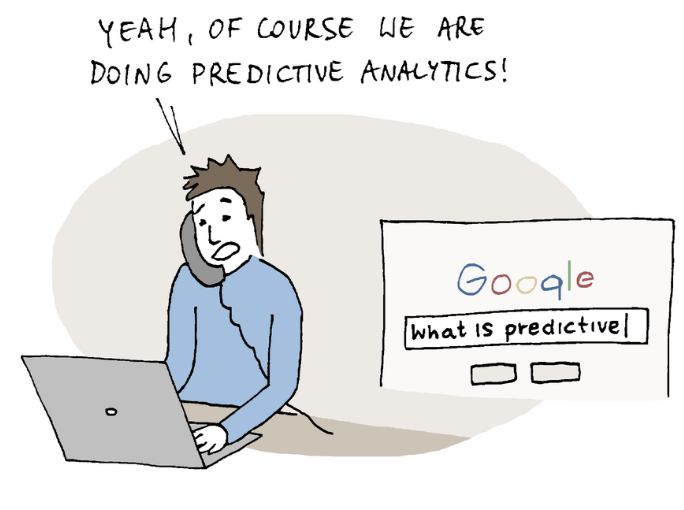
Anticipating Tomorrow’s Customer through Predictive Analytics
A friend of mine, a restaurant owner, tells me half-jokingly that on the days when he is well prepared, customers are few, and the opposite is true when he runs out of ingredients. To me, this isn’t just a joke because I know exactly what he means. Tons of waste are discarded at hotels precisely because of inaccurate forecasting.
El-Hajj et al. (2024) developed a predictive model to anticipate customer responses to marketing campaigns, achieving an accuracy rate of 87.3%. Their empirical findings demonstrated that predictive modeling can significantly enhance campaign targeting efficiency and overall marketing ROI. As such, I want to study various predictive analytics methods, including campaign ROI forecasting.
By leveraging diverse data, I’ll be able to forecast customer behavior to develop effective marketing strategies and campaigns. Today, although we are trying very hard to come up with creative and innovative campaigns, we don’t have accurate measures or tools for analyzing multi-dimensional data. Moreover, precise forecasting is essential; otherwise, we end up with significant waste. For these reasons, predictive analytics is another major area of interest for me.
Quantifying ESG Value: Does ESG really pay?
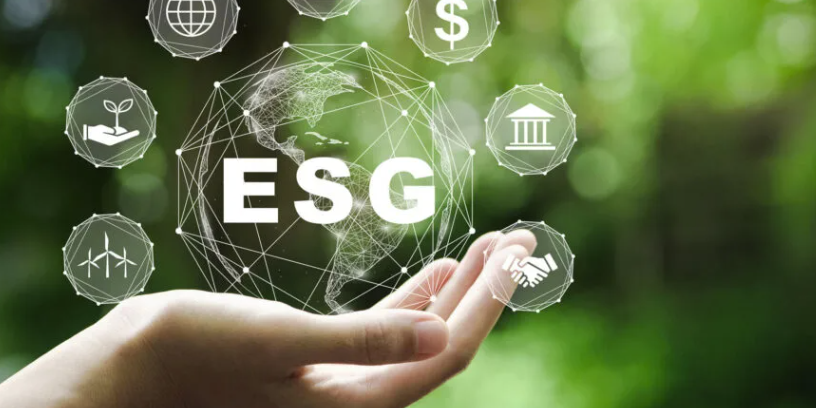
Yes, ESG is taken seriously by many companies today, with extensive efforts being made, like minimizing the use of plastic amenities (which is truly significant in volume) and so forth, but to achieve more, we need a more quantitative approach to demonstrate to top management what ESG means in terms of actual dollars, for instance. In the same way, quantitative analyses that demonstrate how CSR pays off through enhanced corporate image are also essential. My question is crystal clear: what is the return on the ESG certifications that companies invest significant time and capital to earn? PwC addressed this question in its 2024 Voice of the Consumer survey, which found that consumers are willing to pay a 9.7% sustainability premium for products that meet environmental standards.
However, some consumers perceive ESG practices not as value-added features but as basic responsibilities that companies should fulfill by default. As a result, companies that adopt premium pricing strategies based on ESG certifications may face skeptical or even negative consumer reactions. This issue still deserves further scrutiny to assess the gap between willingness and actual spending, as well as other factors such as recession.
When Vibes Match Values: How AI-Detected Vibe Similarity Shapes Consumer Purchase Power
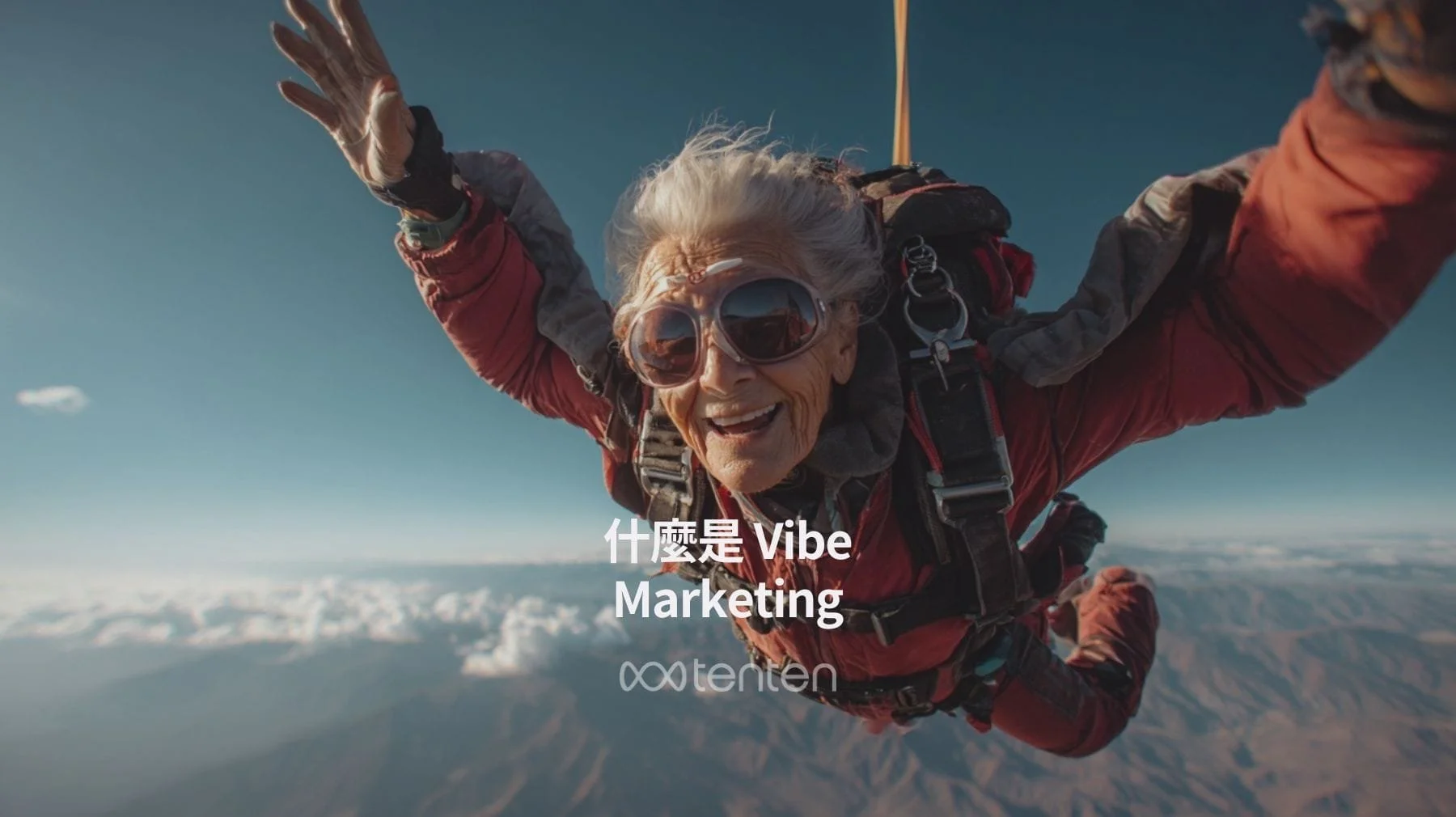
According to A Study on the Influencing Factors of Consumers’ Purchase Intention (Frontiers in Psychology, 2022), emotional trust and perceived emotional value play mediating roles in shaping consumers’ purchase intentions in live-commerce environments. This finding underscores the growing importance of emotion-driven marketing strategies in influencing consumer decision-making. Companies have been increasingly paying attention to MZ consumers who prioritize experience and emotion. Thus, they leverage AI-based vibe marketing to appeal to these consumers through storytelling methods.
However, there is a need to study the ROI: Is this the optimal type of marketing given MZ consumers’ relatively low purchasing power? Do the contents that stimulate them and create consensus through good storytelling lead to actual purchase? What is the effect of word-of-mouth marketing, which may be a key characteristic of vibe marketing? Wouldn’t consumer fatigue level increase as similar content is disseminated? All these questions deserve in-depth academic scrutiny.
For all these, I need Quantitative Marketing. If I were to sum up what I crave, it is the underlying quantitative explanation that I need, and to strategize based on solid quantified analyses. As such, I need to master diverse quantitative tools. For one, the multivariate analysis method, which studies multiple variables and their correlations to detect meaningful patterns, will be most indispensable. In addition, Big Data analytics is also a must-have capability, as service industries continuously generate large volumes of transactional and behavioral data that require sophisticated analytical methods. The hierarchical Bayesian model will also be very helpful for understanding the effects of campaigns, for instance.
Meanwhile, I’ll bring with me the qualities I’ve built throughout my career. For one, I was a founding member of the Grand Hyatt Jeju, where my colleagues and I set up everything from A to Z. Although it was tough, I truly enjoyed the entire process, which I believe reflects my pioneering spirit and ability to create something from scratch—all of which I’m sure I’ll need, since the service industry is not exactly a quantitative analysis-driven industry, at least in Korea, even though the power of quantitative analysis is remarkable. Moreover, this also shows how much I enjoy learning. For instance, I cannot wait to study AI.
Moreover, I love numbers. I began my college education as a STEM major, and nothing compares to the joy of solving a tough math question after struggling for hours. But more than anything, as I continued to volunteer non-stop—teaching math at orphanages and delivering coal briquettes to financially challenged senior citizens—I came to realize that I’m not just seeing numbers but the people behind those numbers.
Last, but never least, I know that I may be a rather atypical candidate, but I believe my professional experience contains the very elements that are essential to marketing research: real customer behavior, business analytics, and measurable impact. This is why your program fits me—because here, data analytics and marketing are the protagonists, and exactly what I need to answer the deeper “whys.”